Failed Deliveries: Why They Happen and How BC Retailers Can Prevent Them
A failed delivery rarely starts on delivery day. It usually starts at checkout, when nobody asked about the stairs, the elevator or whether the customer would actually be home. By the time a two-person crew is standing in a lobby with a sectional that will not fit the elevator, the problem is already a second trip, a frustrated customer and a slot on tomorrow's schedule that could have gone to someone else.
For retailers in BC there is now a second reason to take failed deliveries seriously. Updated consumer protection rules that took effect on August 1, 2026 put more weight on the delivery details and dates you give customers. This guide covers the common causes of failed deliveries, what the BC rules say, and a practical checklist for preventing repeat trips.
What counts as a failed delivery
A failed delivery is any trip where the item leaves the truck but does not end up where the customer expected, or never leaves the truck at all. For bulky goods, the usual outcomes are:
- Nobody home, or nobody authorized to accept and check the item.
- Refused at the door, because the customer changed their mind, the wrong item arrived or something was visibly damaged.
- Access blocked, such as an elevator that was not booked, a building that only allows deliveries at set hours or no legal place to park the truck.
- It does not fit, through the door, up the stairwell or around a tight landing.
- Wrong address or unit, including missing suite numbers and buzzer codes.
Parcel carriers can leave a box at the door and try again tomorrow. With furniture and other heavy items, every failed attempt means a crew, a truck and a time window booked twice.
The causes are mostly predictable
Look back at your last few failed or rescheduled deliveries and most of them will trace to information that existed before the truck left. A few patterns stand out in the Lower Mainland.
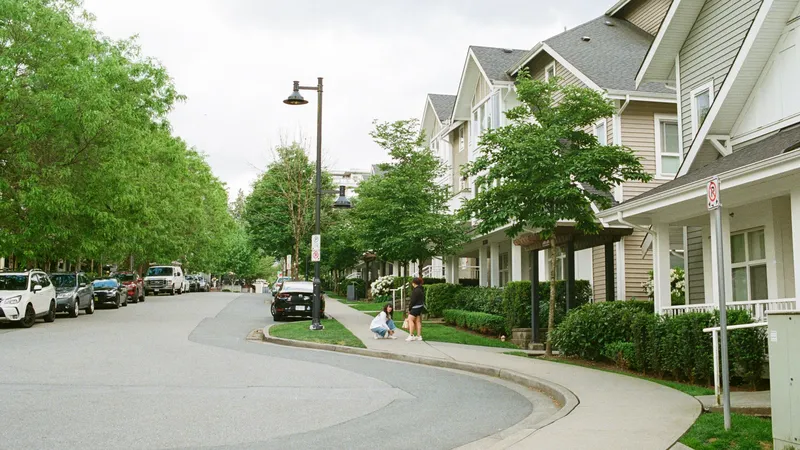
Building rules. Towers and condo buildings often require an elevator booking, padding in the elevator or a delivery inside set hours. Every strata sets its own rules, so what worked in one Burnaby tower may not work in the next one. Our guide to strata move-in and move-out fees in BC explains why those rules differ so much.
Parking and loading. A truck that cannot stop near the entrance turns a short carry into a long one, or into no delivery at all. Rules vary by municipality. Our article on parking a moving truck in Vancouver covers the City of Vancouver's rules as an example.
Measurements nobody took. Older homes, walk-ups and townhouses can have narrow doors, low ceilings over the stairs and tight turns. The product spec sheet lists the item's size, but what matters is the boxed size and the narrowest point on the route inside.
Vague time windows. An "all day" window asks the customer to stay home for eight hours. Many will not, especially on a weekday.
The wrong service level. A customer expecting the sofa to be carried in and set up will not accept a curbside drop. Our guide to curbside, threshold and white glove delivery explains how to define each level so expectations match.
What BC's consumer protection rules mean for delivery dates
This section is general information, not legal advice. Check your own contracts and checkout pages with a lawyer or with Consumer Protection BC if you are unsure.
BC's Business Practices and Consumer Protection Act covers online and phone orders (distance sales contracts) and purchases where goods are supplied later (future performance contracts). Consumer Protection BC's guidance describes future performance contracts as purchases where goods are delivered later or the customer does not pay in full up front, with a total over $50. That covers many furniture orders placed in a showroom for later delivery.
For contracts entered on or after August 1, 2026, the Act requires the contract to include the supplier's delivery arrangements, including the mode of transportation and the place of delivery, and the supply date when goods are not supplied on the day of the sale. For most of these contracts, the key information must also be disclosed before the customer agrees to buy.
The delivery date then matters in two ways:
- Late delivery can allow cancellation. If goods are not delivered within 30 days of the supply date, the customer may cancel at any time before the goods are delivered. For online orders with no supply date in the contract, the 30 days run from the date of the contract. When an online order is cancelled this way, the supplier must refund all money received within 15 days, subject to the rules on returning any goods.
- A properly noticed attempt can count. The Act treats goods as supplied if delivery was attempted and the customer refused it, or if the supplier gave reasonable notice of the delivery and attempted it, but nobody was available to accept it that day.
The practical lesson: a failed attempt without proper notice may leave the clock running, while one that was clearly scheduled and recorded puts you on much firmer ground. Consumer Protection BC also notes that for online orders, the default meaning of delivery is handing the item to the customer directly. If you plan to leave items at the door or with someone else, tell the customer before they buy.
A prevention checklist
At checkout
- Ask the home type: house, townhouse, walk-up or tower.
- Ask about stairs between the street and the door, and how many flights.
- Ask whether the building needs an elevator booking or has delivery hours.
- Ask for the narrowest door and stairwell measurements for large items.
- Collect the full address with suite number, buzzer code and a mobile number.
- Confirm the service level in writing: curbside, threshold, room of choice or white glove.
- Put a realistic supply date in the order, not the earliest possible one.
Before delivery day
- Send written notice of the delivery date and time window, and keep a copy.
- Ask the customer to confirm the elevator booking and clear the path.
- Send a reminder the day before with a short window.
- Flag high-risk orders, such as large sectionals going into older walk-ups, for an extra check.
On delivery day
- Call or text when the crew is on the way.
- If nobody answers, record the time of arrival, calls made and how long the crew waited.
- Take photos at the door or lobby if the delivery cannot be completed.
- Note the reason for every failed attempt in the order record.
Track the reasons, not just the count
Knowing how many deliveries fail is less useful than knowing why they fail. Give every failed attempt a reason code: nobody home, refused, access, does not fit, address or other. After a month, the pattern usually points to one fix, such as a measurement step at checkout, a better reminder message or a firmer rule for tower deliveries. Short windows and a reminder the day before cost very little next to a second trip with a two-person crew.
Need a delivery partner that plans ahead?
In & Out Express provides curbside, threshold and white glove furniture delivery for retailers across the Lower Mainland and Fraser Valley, along with recurring delivery programs, same-day delivery and warehousing. See all our services, learn more about us, or request a business quote and tell us how your deliveries run today.
Sources: Province of British Columbia, Business Practices and Consumer Protection Act, Part 4, ss. 17, 18.2, 18.3, 23, 49, 50 and 53 (current to October 27, 2026); Order in Council 35/2026 (amendments in force August 1, 2026); Consumer Protection BC, Problem with an online purchase?, Understanding recent changes to BC's consumer protection laws and Business update, July 16, 2026 (all accessed October 29, 2026).