BC's Dash Cam Law for Commercial Trucks: What It Requires and Why It Is Not in Force Yet
British Columbia now has a law that will require forward-facing dash cameras in heavy commercial trucks. It passed with support from all parties in May, but as of late October 2026 it still is not in force, and the details that matter most to fleets and shippers have not been written yet.
This article sets out what the Act actually says, which vehicles it is aimed at, what the trucking industry is asking the province to settle, and what it could mean for businesses that hire carriers in the Lower Mainland and Fraser Valley.
What happened
The Dashboard Cameras in Commercial Vehicles Act started as Bill M217, a private member's bill from Kamloops-North Thompson MLA Ward Stamer, rather than a government bill. Key dates:
| Date | Step |
|---|---|
| February 2026 | Bill moves to committee stage |
| May 25, 2026 | Passes third reading after housekeeping amendments |
| May 28, 2026 | Royal Assent (SBC 2026, chapter 17) |
| July 2026 | BC Trucking Association (BCTA) holds the first meeting of its Dashcam Task Force |
| September 22, 2026 | Northern BC Truckers' Association reports the Ministry of Transportation has confirmed dash cams are not yet mandatory |
| October 7, 2026 | Canadian Trucking Alliance urges a national standard using BC as a pilot |
| October 27, 2026 | BC Laws consolidation still lists sections 1 to 5 as not in force |
According to Truck News, Stamer first introduced the legislation after a series of fatal commercial vehicle crashes on BC highways. In May he told Castanet that he estimated a camera meeting the requirements would cost about $300.
What the Act requires
The Act is short. Once it takes effect:
- Which vehicles: commercial vehicles, as defined in BC's Commercial Transport Act, with a gross vehicle weight rating (GVWR) of more than 11,793 kg.
- Owner duty: the owner must install and maintain a dash camera. If the truck is leased, the lessee carries that duty instead.
- Driver duty: the operator must make sure the camera is recording at all times while the vehicle is operated, subject to the regulations, and is not obstructed.
- Camera standard: it must record the road ahead through the windshield, keep at least 72 hours of recording, record in at least 1080p high definition, have night vision, and record to the device's local storage at the manufacturer's default settings.
- Privacy: recordings must be collected, used, disclosed, kept and destroyed in line with privacy law, including BC's Personal Information Protection Act.
Section 6 says the Act comes into force by regulation of the provincial cabinet. That regulation has not been made. According to the Northern BC Truckers' Association, the ministry has said that once regulations are approved there will be an implementation period so carriers can buy and install equipment. No date has been announced.
Which trucks are likely to be covered
The 11,793 kg threshold is not random. It works out to almost exactly 26,000 lb, the dividing line in the standard U.S. Federal Highway Administration weight classes, which are used widely across the industry: medium-duty trucks (Classes 3 to 6) go up to 26,000 lb GVWR, and heavy-duty trucks (Classes 7 and 8) are above it. Castanet reported that the threshold was raised to 11,793 kg by amendment during committee.
In practice, that means:
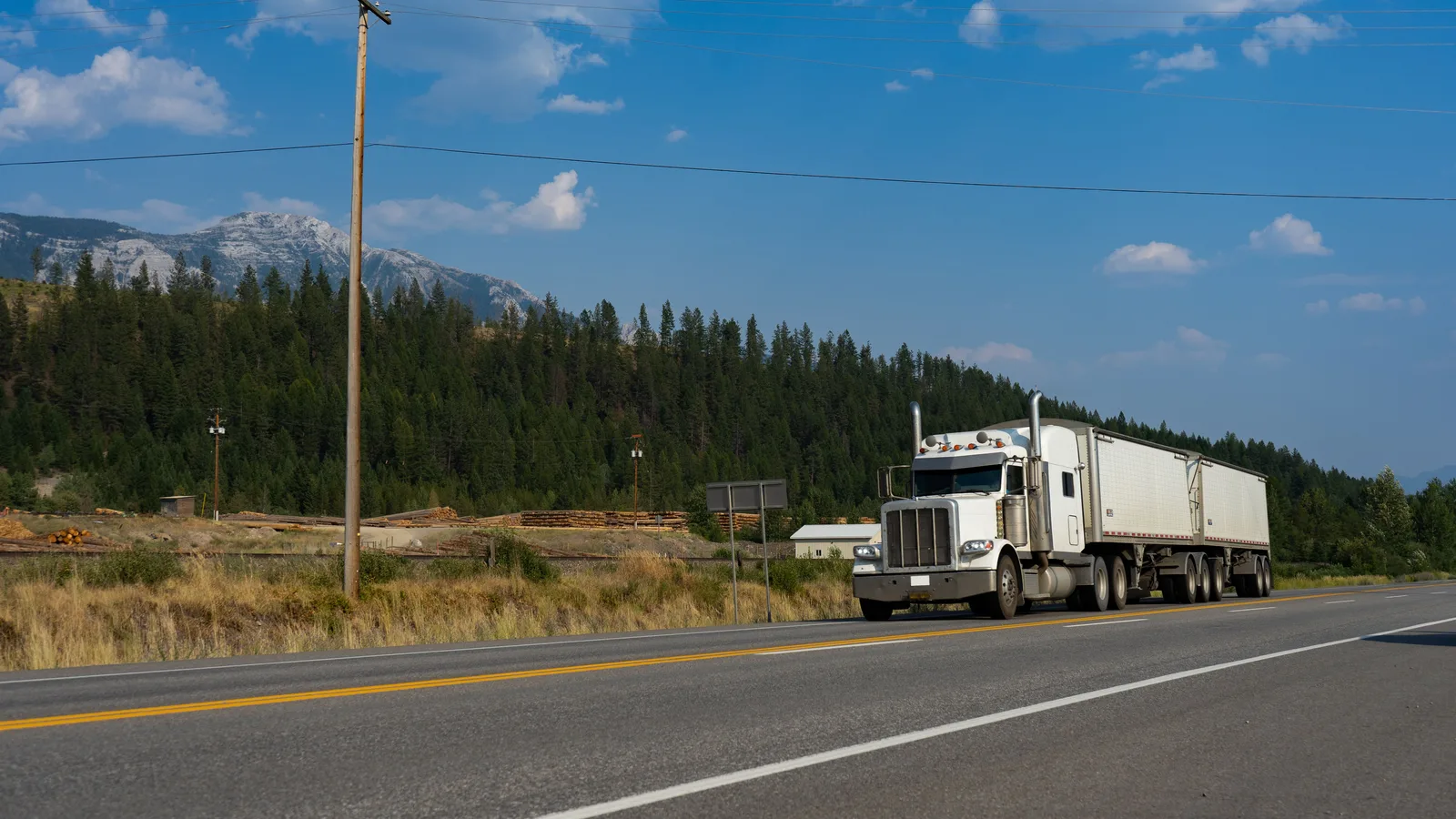
- Tractor-trailers and heavy straight trucks bringing freight into warehouses and distribution centres are squarely in scope.
- Many medium-duty box trucks and cube vans used for local delivery sit below the threshold.
- Trucks rated right around 26,000 lb sit very close to the line. GVWR is printed on the manufacturer's compliance label, usually on the driver's door frame, and the final regulations may clarify edge cases.
The BCTA task force has also asked the province to clarify how the law applies to specialized and vocational equipment such as cranes and concrete trucks.
What the industry wants settled
The BCTA task force raised several practical questions the regulations will need to answer:
- Hardware. Many existing fleet cameras can keep 72 hours at lower resolution, or 1080p for a shorter period, but not both. Meeting both at once could mean upgrades.
- Storage. The Act refers to local storage. Members asked that cloud storage also be allowed, since it can preserve footage if a camera is damaged in a crash, while noting that local storage still matters where cell coverage is poor.
- Access to footage. Who can request recordings, how quickly carriers must hand them over, and whether a carrier can be required to provide footage when its truck was only a witness.
- Driver privacy. Members asked the regulations to confirm that the requirement covers forward-facing video only, not inward-facing cameras or audio.
- Installation and maintenance. A camera that is dirty, misaligned or blocked is technically present but useless, so members want clear guidance on mounting and upkeep.
Nationally, the Canadian Trucking Alliance wrote to Canada's transportation ministers proposing a 12-month government-industry working group that would use BC's rollout as a pilot for a pan-Canadian standard, to avoid a patchwork of provincial rules.
Our analysis: what this means for businesses that ship and receive
For most retailers, wholesalers and e-commerce brands in the Lower Mainland, this law does not create a direct obligation. The duty falls on the owner or lessee of the truck. But it will shape the carriers you work with.
Inbound freight will be the first to change. The heavy trucks delivering containers and pallets to your dock are the ones the threshold captures. Over time, collisions and road incidents involving those trucks should be easier to investigate because footage will exist.
Road footage does not settle doorstep disputes. A forward-facing camera records the road ahead, not the loading dock, the hallway or the living room. If a sofa arrives scuffed, the evidence that helps is still photos at pickup and drop-off and a signed delivery record. Our guide to failed deliveries and how BC retailers can prevent them covers proof of delivery in more detail, and curbside, threshold and white glove delivery explains where responsibility usually changes hands.
Smaller delivery trucks may be outside the rule. If your last-mile partner runs medium-duty trucks, they may not be covered at all. That is not a red flag, but it is worth knowing which vehicles a carrier will send.
Privacy questions are worth asking now. If a carrier already runs cameras, ask how long footage is kept, who can see it and how they handle it under privacy law. A carrier with a clear answer is usually one that runs an organized operation.
Watch for the regulations. The real requirements, the start date and the implementation period will all come from regulations that have not been published. This article will be updated when they are.
Questions to ask a carrier
- Which trucks, by GVWR, will handle our freight?
- Do those trucks already have forward-facing cameras, and how long is footage kept?
- How do you document condition at pickup and delivery?
- How would you share footage or photos if there is a dispute?
Looking for a delivery partner?
In & Out Express provides commercial delivery, curbside, threshold and white glove furniture delivery, recurring delivery programs for retailers, same-day delivery and warehousing across the Lower Mainland and Fraser Valley. See our delivery services, read more about us, or request a business quote.
Sources: BC Laws, Dashboard Cameras in Commercial Vehicles Act, SBC 2026, c. 17 (current to October 27, 2026) and Bill M 217, Third Reading text; Castanet Kamloops, Dash cam bill clears house (May 25, 2026); BC Trucking Association, BCTA Convenes Inaugural Dashcam Task Force Meeting (July 27, 2026); Truck News, BCTA gathers industry input on B.C.'s dashcam legislation (July 28, 2026); Northern BC Truckers' Association, Upcoming Dashcam Requirements for Commercial Vehicles (September 22, 2026); Canadian Trucking Alliance, CTA Proposes Collaborative National Framework for Dash-Cam Standards (October 7, 2026); U.S. Department of Energy Alternative Fuels Data Center, Vehicle Weight Classes and Categories (all accessed October 31, 2026).