What Should You Never Put in a Moving Truck?
Most of what you own can go in a moving truck without a second thought. A few things should not, either because they can leak, catch fire or explode in a closed cargo box, or because losing them would wreck your first week in the new place.
The items that cause trouble are usually the ones nobody thinks to pack until the last hour: the barbecue tank on the deck, the half-full gas can in the garage, the shelf of old paint in the storage locker. Here is what to keep out of the truck, why, and what to do with each item instead.
Why some household items do not belong in the truck
Transport Canada points out that many ordinary household products are classed as dangerous goods, including paints, pesticides, lawn fertilizers and devices powered by lithium batteries (Transport Canada). Its guidance on batteries puts them in the same regulatory family as gasoline and propane (Transport Canada, Transporting Batteries).
A moving truck makes these risks worse. The cargo box is closed, unventilated and packed tight, so a slow leak has nowhere to go, and a fire can spread through boxes and furniture before anyone notices. Every moving company sets its own list of items it will not carry, so ask yours before moving day rather than at the curb.
1. Propane tanks and fuel canisters
Barbecue cylinders, camp stove canisters and patio heater tanks are the classic example. The Canadian Propane Association says to never put a propane cylinder in a closed vehicle, never leave one in a parked vehicle with the windows up because heat builds quickly, and always carry it upright and secured so it cannot tip over (Canadian Propane Association). The back of a moving truck fails every one of those tests.
What to do instead: disconnect the tank, cap the outlet, and move it yourself in your own vehicle following those rules, with a window open and the tank strapped upright. Better still, use it up or give it away. In Metro Vancouver:
- The Vancouver Zero Waste Centre at 8588 Yukon Street takes propane tanks free from residents, up to four disposable and two refillable tanks (City of Vancouver).
- The Central Surrey Recycling and Waste Centre takes household barbecue and small camping tanks free, up to 100 pounds, but not vehicle tanks (Metro Vancouver).
Never put a pressurized cylinder in your garbage or recycling cart. The Recycling Council of BC warns they can explode when compacted in a collection truck (RCBC).
2. Gasoline and fuel-powered equipment
Gas cans, and the fuel sitting in lawn mowers, trimmers, pressure washers and generators, are a fire risk in a closed box full of cardboard and fabric. Before a mower or trimmer goes on the truck, check its owner's manual for how to prepare it for storage or transport, which usually means emptying the fuel. Leftover gasoline is something you can get rid of properly before the move instead of moving it.
What to do instead: BC's household hazardous waste program, run by Product Care Recycling, accepts gasoline for free, but only in a ULC-approved gas can or jerry can, and the can is not returned to you (Product Care Recycling). Central Surrey accepts gasoline in an approved container of up to 25 litres; it does not accept diesel (Metro Vancouver).
3. Paint, solvents, aerosols and garden chemicals
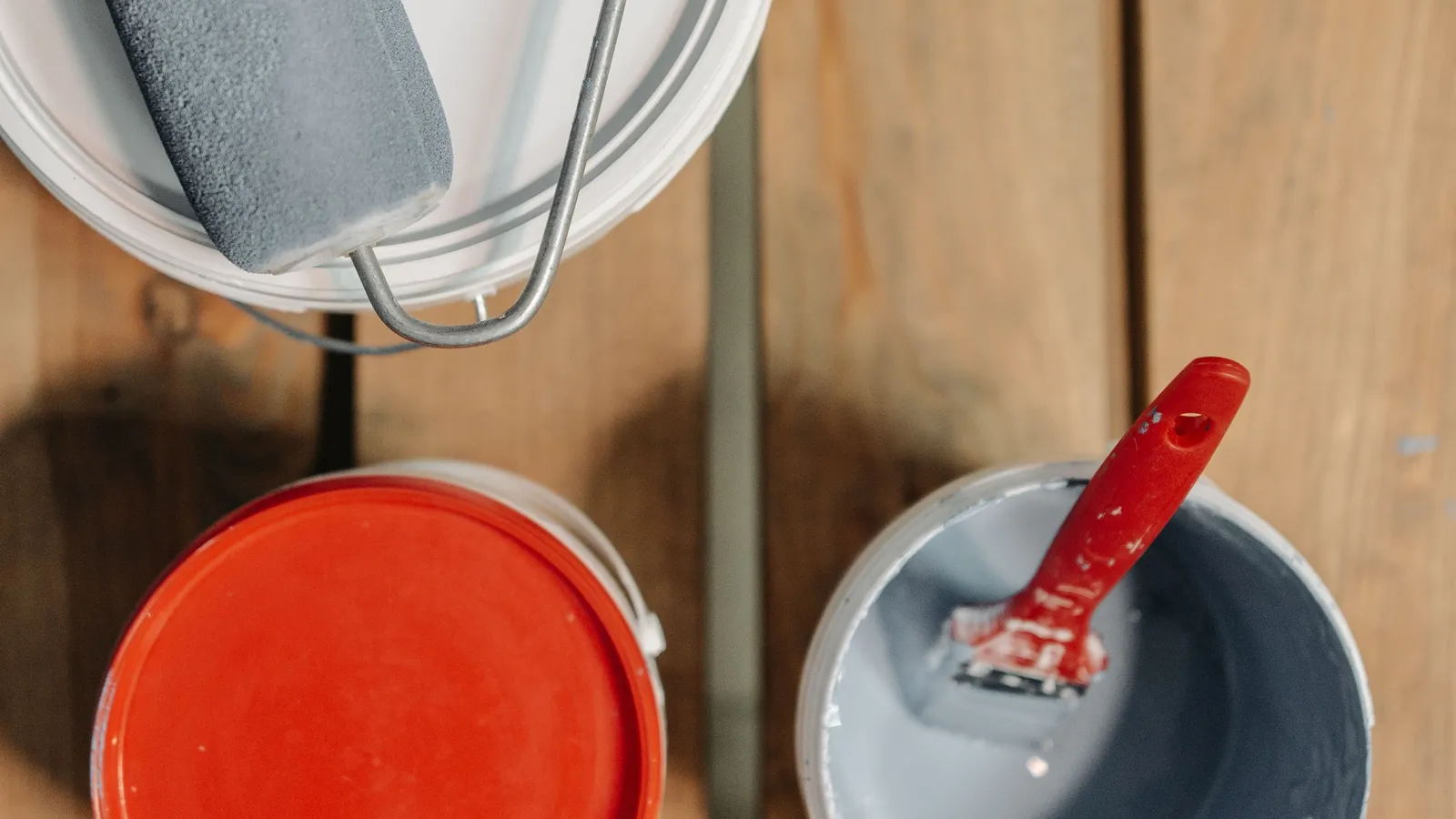
Paint thinner, turpentine, lighter fluid, furniture stripper, spray paint and pesticides can leak, give off fumes or burn. A tin of paint that looks sealed can pop its lid when a box shifts on a hard stop.
What to do instead: sort the garage and storage locker a couple of weeks before the move and decide what you will actually use again. Product Care's BC program accepts leftover paint at more than 200 sites, and flammable liquids and pesticides at about 100 of them, so use its locator to confirm a site takes household hazardous waste (Product Care Recycling). Products must be in their original containers with labels intact and must not be leaking (Product Care Recycling).
At Central Surrey, paint containers of up to 23 litres are accepted free, with a limit of 10 cans of paint or 50 aerosols per visit (Metro Vancouver). Do not hide these in a garbage load: at Central Surrey, Metro Vancouver applies a minimum $80 surcharge to loads containing banned hazardous materials.
If you do keep a few cans of touch-up paint for the new place, make sure the lids are hammered down, then move them in your own car, upright in a plastic bin.
4. Damaged or swollen lithium batteries
Laptops, phones, power tools, e-bikes and e-scooters all run on lithium-ion batteries. Health Canada says not to use batteries that are swollen, dented or otherwise damaged, and to keep batteries away from extreme heat and cold, including a hot or cold car (Health Canada). Transport Canada notes that a lithium battery fire can spread to nearby batteries and is hard to put out (Transport Canada).
What to do instead: carry laptops, phones and their chargers with you. Pack loose spare batteries with the terminals taped or each one in its own bag. Recycle anything swollen or damaged rather than moving it. Note that Central Surrey's battery drop-off does not take damaged, defective or recalled batteries and points people to the Recycle Your Batteries, Canada! program instead (Metro Vancouver).
5. Things you cannot replace or cannot be without
These are not dangerous. They are just too important to bury in a stack of boxes:
- Passports, birth certificates, lease or purchase documents, and the keys to both homes
- Prescription medications and anything you need daily
- Jewellery, cash and family photos or hard drives you cannot replace
- Laptop, phone and chargers
- Pet food, leashes and carriers (and pets themselves, which always travel with you)
Put them in one clearly marked bag or bin that rides in your car. If you are planning a first-night box, this is its more important cousin.
6. Open food, open liquids and plants
Opened jars, freezer contents and anything that can spill or spoil are better eaten, given away or moved in a cooler in your own car. Plants also do better out of a dark cargo box, especially on a long day.
Quick reference
| Item | Why not in the truck | What to do |
|---|---|---|
| Propane tanks, fuel canisters | Pressurized, needs ventilation | Move upright in your own vehicle, or drop off at a depot |
| Gasoline, fuelled equipment | Fire risk in a closed box | Empty per manual; drop gas off in an approved can |
| Paint, solvents, pesticides | Leaks, fumes, flammable | Use up, or drop off through Product Care |
| Damaged lithium batteries | Can overheat and ignite | Recycle; carry good devices with you |
| Documents, keys, medication | Irreplaceable or needed daily | Keep in a bag in your car |
| Open food and liquids | Spills and spoils | Use up, donate or cooler in your car |
A two-week clear-out plan
- Two weeks out: walk the garage, balcony, storage locker and under the sinks. Pull out every tank, can and chemical.
- Ten days out: check the Product Care locator or Metro Vancouver Recycles for the nearest depot, and confirm hours. Central Surrey is on winter hours from October 1 to March 31 (8 a.m. to 5 p.m. Monday to Saturday, 9 a.m. to 5 p.m. Sundays).
- One week out: make one depot run. Keep anything you are bringing in a single plastic bin for your car.
- The night before: pack your keep-with-you bag.
Ready for the rest of it?
Once the hazardous stuff is sorted, the rest of the move is boxes and furniture. In & Out Express does residential moves across the Lower Mainland and Fraser Valley with a two-person crew and a 26 ft truck. See our services or request a move. For the packing itself, read how to pack a kitchen without breaking anything and how to pack a TV safely, and if you are moving in the City of Vancouver, check our guide to parking a moving truck.
Sources: Transport Canada, Hidden hazards: Everyday items that qualify as dangerous goods, Transporting batteries and Shipping and importing lithium batteries; Health Canada, Lithium-ion battery safety; Canadian Propane Association, Handling and transporting propane cylinders; Product Care Recycling, Household hazardous waste in BC and Paint recycling in BC; City of Vancouver, Vancouver Zero Waste Centre; Metro Vancouver, Central Surrey Recycling and Waste Centre; Recycling Council of BC, What can I do with my empty propane tank? (all accessed October 30, 2026).